
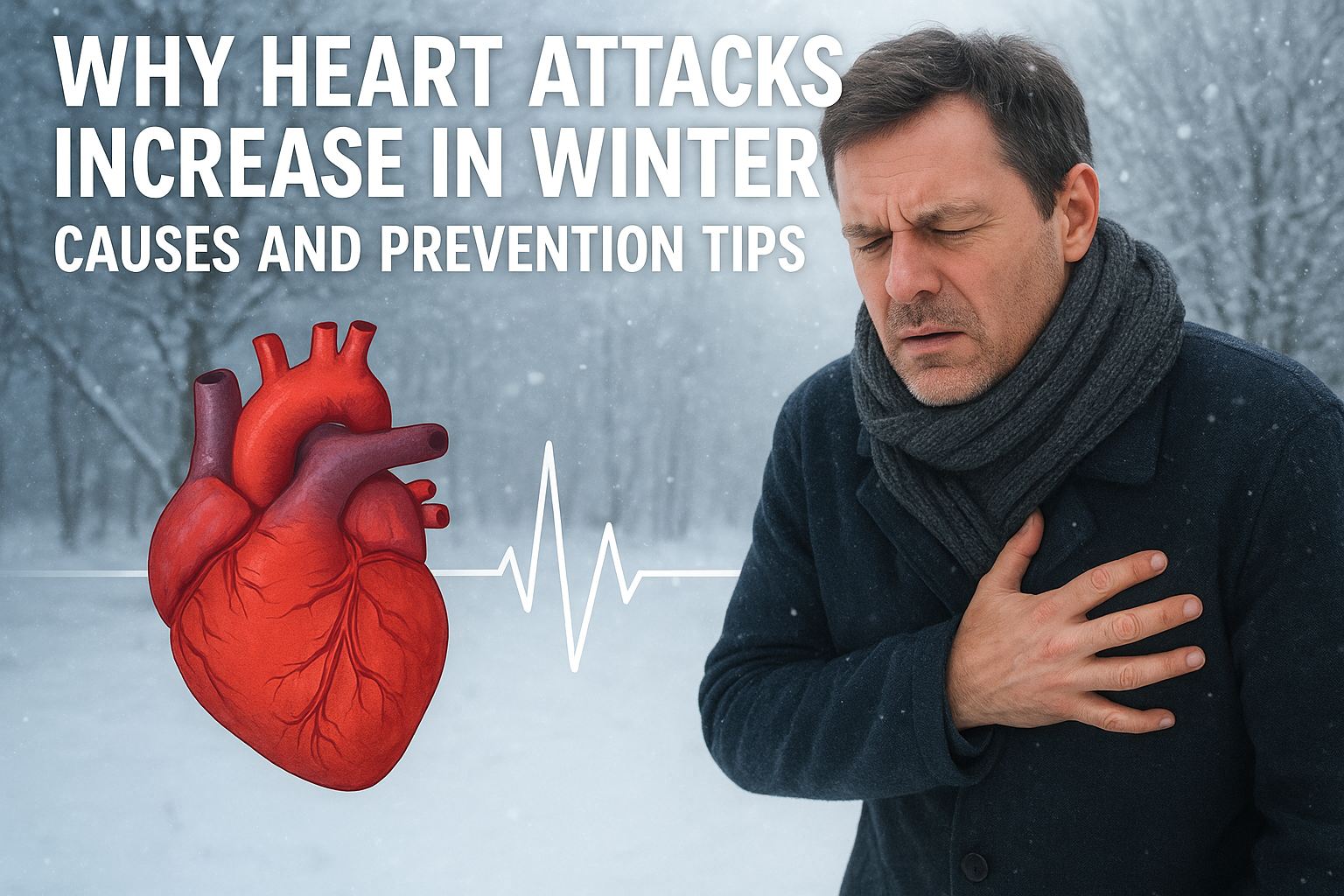
Winter brings a noticeable rise in cardiovascular emergencies, especially among people with existing heart conditions. The fall in temperature affects blood vessels, increases strain on the heart, and raises the chances of a sudden cardiac event. Understanding winter-related heart risks can help you stay safe and take preventive steps early.
Why Heart Risks Rise in Cold Weather
The cold environment triggers the body to conserve heat. This causes blood vessels to narrow, forcing the heart to pump harder. For people with high blood pressure, cholesterol issues, or diabetes, this extra workload increases the risk of a heart attack, especially in early mornings when temperature dips are severe.
1. Sudden Drop in Temperature
-
Cold air tightens arteries, reducing blood flow.
-
Restricted circulation increases the chances of clot formation.
-
Morning exposure raises the stress on your heart.
2. Higher Blood Pressure Levels
-
Winter naturally increases blood pressure.
-
Thickened blood moves slowly, making blockages more likely.
-
People with hypertension are at greater risk.
3. Reduced Physical Activity
-
People tend to stay indoors in winter.
-
Low activity leads to weight gain and poor circulation.
-
Lack of exercise weakens the heart muscle.
4. Viral Infections & Flu
-
Winter infections increase inflammation in the body.
-
Inflamed arteries become more vulnerable to blockages.
-
Flu can worsen chest discomfort or trigger cardiac strain.
5. Overeating During Festive Season
-
Winter celebrations often include heavy meals.
-
High-fat foods raise cholesterol levels.
-
Sudden spikes in triglycerides stress the heart.
Prevention Tips for a Healthier Winter Heart
Stay Physically Active
Light walking, stretching, and home workouts maintain heart strength and blood flow during cold months.
Dress in Warm Layers
Cover your head, hands, and feet to reduce heat loss and prevent blood vessels from tightening.
Monitor Blood Pressure & Sugar Levels
Check levels regularly, especially for people with chronic health issues or age-related risks.
Maintain a Balanced Diet
Include fruits, vegetables, nuts, and warm soups. Limit salt, sugar, and fried foods to reduce cardiac stress.
Avoid Sudden Temperature Exposure
Move slowly from warm rooms into cold outdoor temperatures to prevent a sudden rise in heart workload.
Conclusion
Cold weather increases heart strain, but simple lifestyle steps such as regular exercise, warm clothing, and healthy eating can help protect your heart through winter months.
People with heart disease must be extra careful during chilly mornings. Routine checkups, timely medications, and early symptom awareness can help prevent emergencies and improve heart safety.
If you notice chest pain, breathlessness, or unusual fatigue in winter, seek timely help. For expert care, visit our KHIMS Hospitals.