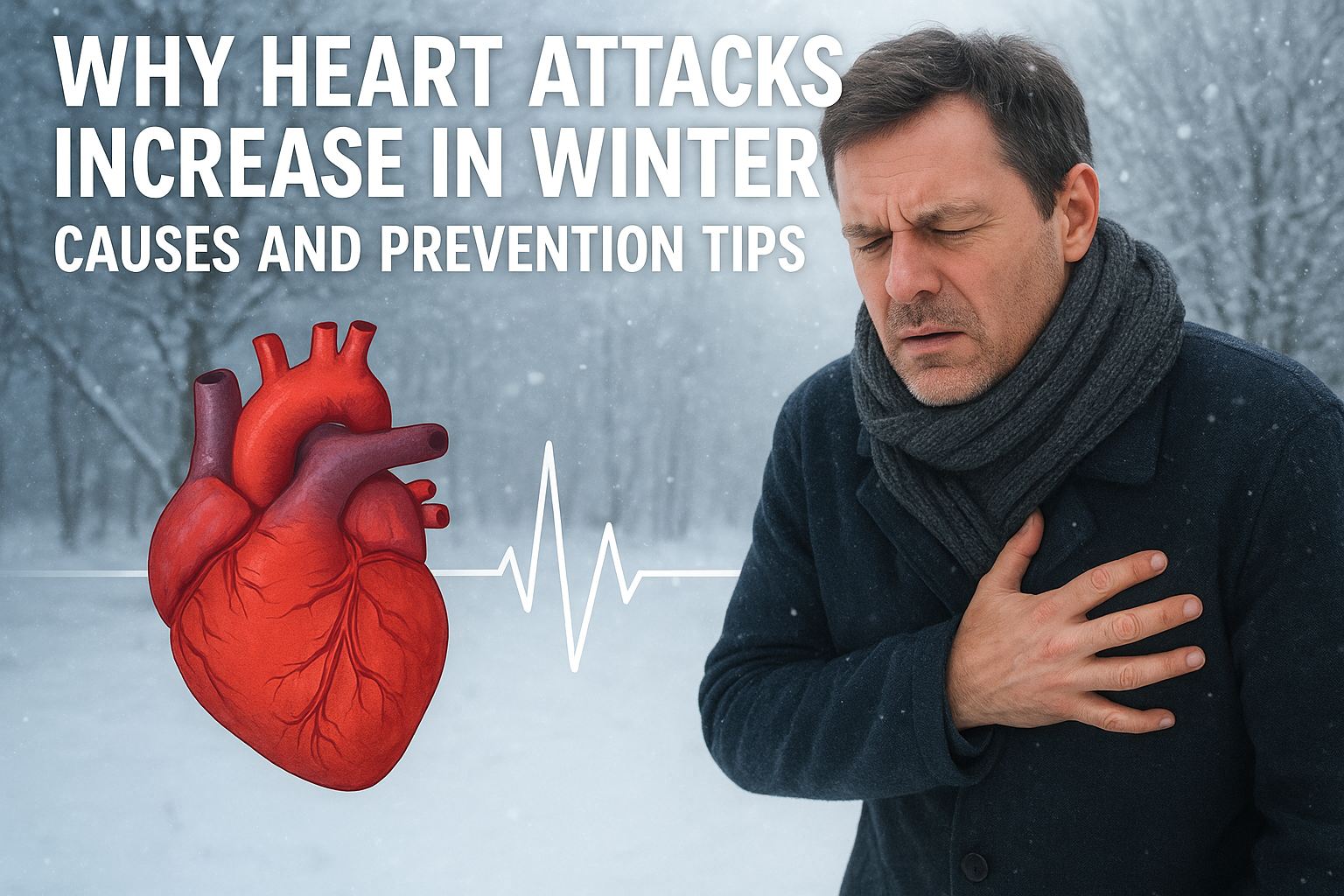
Why Heart Attacks Increase in Winter: Causes and Prevention Tips

Winter brings a noticeable rise in cardiovascular emergencies, especially among people with existing heart conditions. The fall in temperature affects blood vessels, increases strain on the heart, and raises the chances of a sudden cardiac event. Understanding winter-related heart risks can help you stay safe and take preventive steps early.

Why Heart Risks Rise in Cold Weather

The cold environment triggers the body to conserve heat. This causes blood vessels to narrow, forcing the heart to pump harder. For people with high blood pressure, cholesterol issues, or diabetes, this extra workload increases the risk of a heart attack, especially in early mornings when temperature dips are severe.

1. Sudden Drop in Temperature

  • Cold air tightens arteries, reducing blood flow.

  • Restricted circulation increases the chances of clot formation.

  • Morning exposure raises the stress on your heart.

2. Higher Blood Pressure Levels

  • Winter naturally increases blood pressure.

  • Thickened blood moves slowly, making blockages more likely.

  • People with hypertension are at greater risk.

3. Reduced Physical Activity

  • People tend to stay indoors in winter.

  • Low activity leads to weight gain and poor circulation.

  • Lack of exercise weakens the heart muscle.

4. Viral Infections & Flu

  • Winter infections increase inflammation in the body.

  • Inflamed arteries become more vulnerable to blockages.

  • Flu can worsen chest discomfort or trigger cardiac strain.

5. Overeating During Festive Season

  • Winter celebrations often include heavy meals.

  • High-fat foods raise cholesterol levels.

  • Sudden spikes in triglycerides stress the heart.

Prevention Tips for a Healthier Winter Heart

Stay Physically Active

Light walking, stretching, and home workouts maintain heart strength and blood flow during cold months.

Dress in Warm Layers

Cover your head, hands, and feet to reduce heat loss and prevent blood vessels from tightening.

Monitor Blood Pressure & Sugar Levels

Check levels regularly, especially for people with chronic health issues or age-related risks.

Maintain a Balanced Diet

Include fruits, vegetables, nuts, and warm soups. Limit salt, sugar, and fried foods to reduce cardiac stress.

Avoid Sudden Temperature Exposure

Move slowly from warm rooms into cold outdoor temperatures to prevent a sudden rise in heart workload.

Conclusion 

Cold weather increases heart strain, but simple lifestyle steps such as regular exercise, warm clothing, and healthy eating can help protect your heart through winter months.

People with heart disease must be extra careful during chilly mornings. Routine checkups, timely medications, and early symptom awareness can help prevent emergencies and improve heart safety.

If you notice chest pain, breathlessness, or unusual fatigue in winter, seek timely help. For expert care, visit our KHIMS Hospitals.

Why Does Your Breathing Suddenly Speed Up? Causes & How to Manage Them

Have you ever noticed your breathing suddenly speeding up for no clear reason? Known as tachypnea, this rapid breathing may result from anxiety, lung infections, or heart issues. Understanding the causes of fast breathing and how to manage it can help you maintain a healthy respiratory system and prevent complications.

What Is Rapid Breathing?

Rapid breathing occurs when your breathing rate exceeds the normal 12–20 breaths per minute in adults. It’s the body’s way of compensating for low oxygen levels or increased physical or emotional stress. While occasional fast breathing is harmless, frequent episodes may point to underlying respiratory disorders or cardiac conditions.

Common Causes of Sudden Fast Breathing

a. Anxiety or Panic Attacks

Emotional stress can cause hyperventilation, where your breathing becomes shallow and fast. This happens as your body releases adrenaline in a “fight-or-flight” response.

b. Asthma and Allergies

Asthma triggers airway constriction and inflammation, leading to shortness of breath and wheezing. Allergic reactions can have similar effects.

c. Lung Infections

Infections like pneumonia, bronchitis, or COVID-19 can lower oxygen levels, forcing the lungs to work harder and increase breathing speed.

d. Heart Conditions

In heart failure or cardiac arrest, fluid buildup in the lungs restricts airflow, causing rapid and shallow breathing.

e. Physical Activity or High Altitude

During exercise or at higher altitudes, oxygen demand rises, leading to a natural increase in respiration.

f. Metabolic Disorders

Diseases like diabetic ketoacidosis can create an acidic environment in the body, triggering deep and rapid breathing to balance pH.

Symptoms That Accompany Rapid Breathing

When your breathing speeds up, other warning signs may appear depending on the underlying cause.

Common accompanying symptoms include:

  • Chest tightness or pain – often felt during asthma attacks or anxiety episodes.
  • Dizziness or lightheadedness – caused by reduced carbon dioxide levels during hyperventilation.
  • Bluish lips or fingertips (cyanosis) – a sign of low oxygen levels in the blood.
  • Excessive sweating and palpitations – common during panic or heart-related breathing issues.
  • Fatigue and confusion – prolonged rapid breathing can reduce oxygen delivery to the brain and muscles.
  • Wheezing or coughing – indicates a possible lung infection or airway inflammation.

If these symptoms persist or worsen, it may suggest a serious respiratory or cardiac problem requiring prompt medical evaluation.

How to Manage Sudden Fast Breathing

a. Deep Breathing Exercises

Inhale slowly through your nose, hold for 3 seconds, and exhale through your mouth. This reduces stress and stabilizes breathing.

b. Maintain Proper Posture

Sit upright or stand tall to open the chest cavity and allow full lung expansion.

c. Relaxation Techniques

Practice meditation, yoga, or mindfulness to ease stress-related breathing issues.

d. Stay Hydrated and Avoid Overexertion

Drink plenty of fluids and avoid pushing your limits during physical activity.

e. Seek Medical Help if Needed

If episodes of rapid breathing are frequent, consult a healthcare provider to identify underlying causes.

When to See a Doctor

While occasional fast breathing due to exertion or stress is normal, persistent or sudden breathing difficulty should never be ignored.

Seek immediate medical help if you experience:

  • Chest pain or pressure that spreads to the arm, neck, or jaw.
  • Severe shortness of breath even while resting.
  • Bluish discoloration of lips or nails indicating low oxygen.
  • Confusion, fainting, or dizziness suggesting low blood flow to the brain.
  • Cough with blood or mucus, which may signal infection or lung disease.

These symptoms can point to conditions such as pulmonary embolism, heart failure, or chronic obstructive pulmonary disease (COPD). Early diagnosis and treatment at a trusted hospital can save lives and restore normal breathing function.

Conclusion

Rapid breathing is often a sign that your body is under stress, either physically or emotionally. Identifying the cause early helps prevent long-term complications.

Adopting relaxation techniques, staying hydrated, and seeking timely medical advice can help you maintain strong respiratory health.

Visit our KHIMS Hospital Khammam for expert diagnosis and treatment of breathing and lung-related conditions.

Top 10 Lifestyle Changes to Keep Your Heart Healthy

A healthy heart is the foundation of a long and energetic life. With rising cases of heart disease, taking proactive steps toward heart health is more important than ever. Small daily changes can make a big difference in protecting your heart and improving your overall cardiovascular wellness.

1. Eat a Balanced Diet

A nutritious heart-healthy diet rich in fruits, vegetables, whole grains, and lean proteins keeps your arteries clear and reduces cholesterol. Limit saturated fats, salt, and sugar for better cardiac care.

2. Exercise Regularly

Engaging in regular physical activity strengthens the heart muscle, improves blood circulation, and helps maintain ideal body weight. Aim for at least 30 minutes of brisk walking, cycling, or swimming daily.

3. Maintain a Healthy Weight

Being overweight increases your risk of high blood pressure and heart disease. Monitor your BMI and waist circumference to stay within healthy limits and support your heart fitness.

4. Quit Smoking

Smoking is a major cause of heart attacks and stroke. Quitting smoking can significantly enhance your heart’s function and increase your life expectancy. Seek professional help if needed.

5. Limit Alcohol Consumption

Excessive alcohol can raise blood pressure and damage the heart muscle. Practice moderation to ensure healthy circulation and prevent cardiac complications.

6. Manage Stress Effectively

Chronic stress leads to inflammation and irregular heartbeat. Try meditation, yoga, or deep breathing exercises to calm your mind and support emotional well-being.

7. Get Enough Sleep

Quality sleep is essential for heart rhythm stability. Poor sleep increases the risk of hypertension, obesity, and diabetes—conditions linked to heart disease. Aim for 7–8 hours nightly.

8. Monitor Blood Pressure Regularly

Regular blood pressure check-ups help detect early signs of heart strain. Keep your readings below 120/80 mmHg and consult your doctor if they rise consistently.

9. Control Cholesterol Levels

Excess LDL cholesterol can clog arteries and cause heart attacks. Include foods rich in omega-3 fatty acids, fiber, and antioxidants to maintain healthy lipid balance.

10. Stay Hydrated

Drinking enough water helps in maintaining proper blood circulation and prevents dehydration-related stress on the heart. Replace sugary drinks with water or herbal tea.

Conclusion

Your heart works tirelessly for you—so take care of it with simple, consistent lifestyle habits. These ten changes can significantly lower your risk of cardiovascular problems and boost long-term vitality.

Visit our KHIMS Hospitals for expert cardiology care, advanced treatments, and personalized guidance for a stronger, healthier heart.