
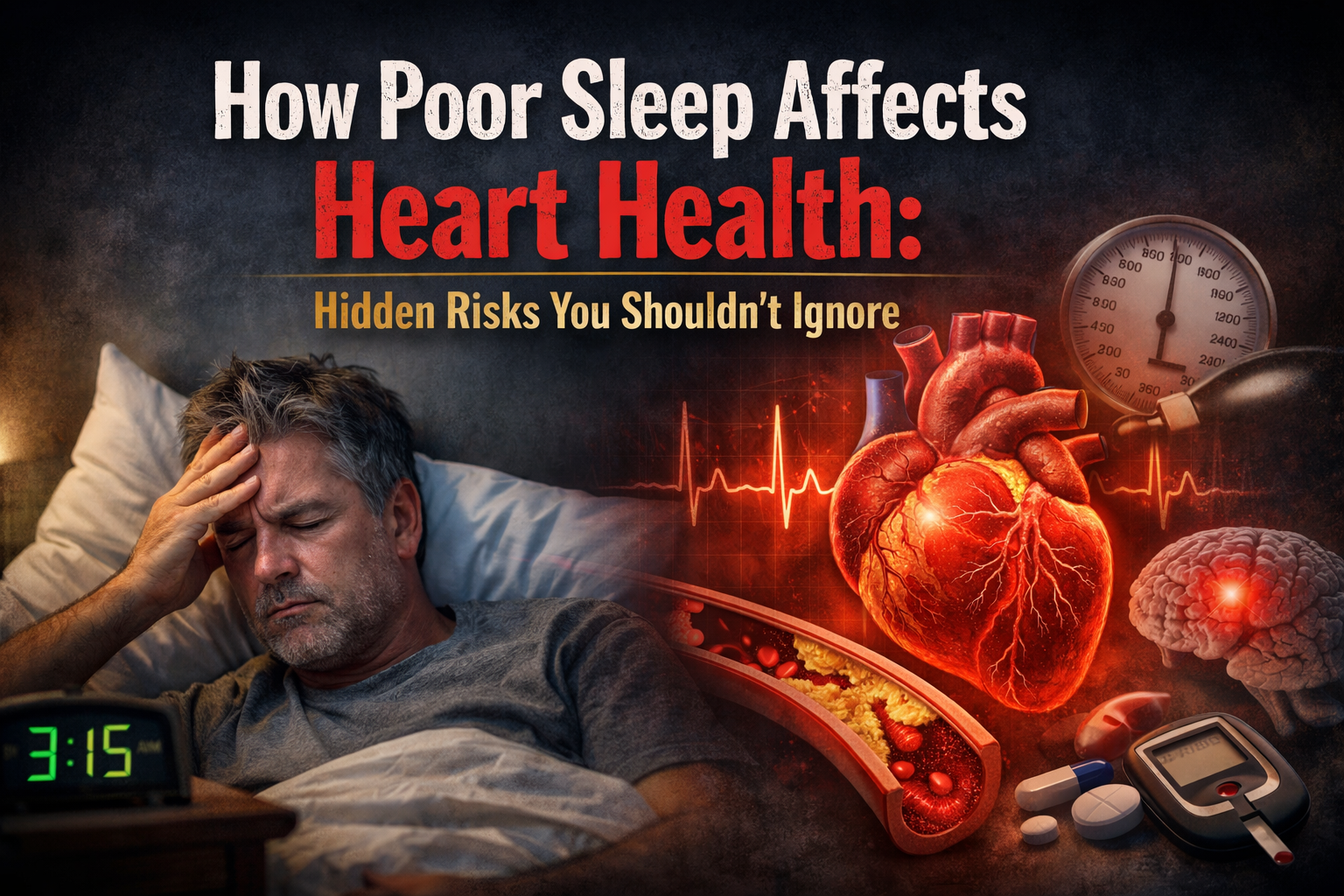
Sleep is not just rest—it’s a vital process that supports your body’s recovery, especially your heart. Poor sleep habits are increasingly linked to serious cardiovascular issues, making it essential to understand how sleep impacts heart health and what risks you may be overlooking.
Why Sleep is Essential for Heart Health
During sleep, your body regulates blood pressure, heart rate, and stress hormones. Consistent sleep deprivation disrupts these processes, increasing strain on the heart and blood vessels. Over time, this can lead to long-term damage and reduced cardiovascular efficiency.
Hidden Risks of Poor Sleep
1. Increased Risk of Hypertension
Lack of quality sleep can lead to high blood pressure, as the body fails to relax and reset overnight. Persistent elevation increases the risk of heart attack and stroke.
2. Higher Chances of Heart Disease
People with irregular sleep patterns are more prone to developing cardiovascular disease, including coronary artery problems and heart failure.
3. Impact on Blood Sugar Levels
Poor sleep affects insulin sensitivity, increasing the risk of diabetes and heart health complications, which directly burden the cardiovascular system.
4. Weight Gain and Obesity
Sleep loss alters hunger hormones, leading to overeating and obesity risk factors, which significantly contribute to heart-related conditions.
5. Increased Stress and Inflammation
Insufficient rest raises cortisol levels and promotes chronic inflammation, both of which damage blood vessels and increase cardiac risk.
The Connection Between Sleep Disorders and the Heart
Conditions like insomnia and sleep apnea are strongly linked with sleep disorders and heart health. Sleep apnea, in particular, causes repeated interruptions in breathing, lowering oxygen levels and putting immense strain on the heart.
Signs Your Sleep is Affecting Your Heart
Constant fatigue or daytime drowsiness
Irregular heartbeat or palpitations
Morning headaches
Difficulty concentrating
Increased blood pressure levels
Tips to Improve Sleep for Better Heart Health
Maintain a consistent sleep schedule
Avoid caffeine before bedtime
Create a calm sleeping environment
Limit screen time at night
Practice relaxation techniques like meditation
When to Seek Medical Help
If you experience persistent sleep issues or symptoms related to heart problems, consult healthcare experts. Early intervention can prevent serious complications. Visit our KHIMS Hospitals for expert guidance and advanced care.
Conclusion
Poor sleep is a silent threat that gradually damages your heart. Ignoring sleep issues can lead to serious long-term health complications. Prioritizing rest is essential for a healthy life.
Improving sleep habits can significantly reduce cardiovascular risks. Simple lifestyle changes can protect your heart and enhance overall well-being.