
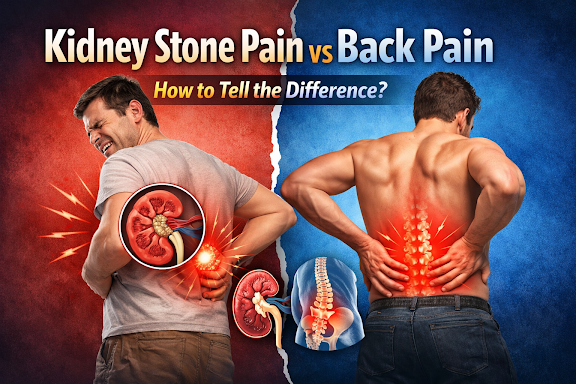
Pain in the lower back is one of the most common health complaints. But what if that pain is not just a simple muscle strain? Many people confuse kidney stone pain with regular back pain, which can delay proper treatment. Understanding the difference can help you take the right action at the right time.
What is Kidney Stone Pain?
Kidney stones are hard mineral deposits that form in the kidneys. When they move through the urinary tract, they can cause severe and sharp pain, often referred to as renal colic.
Key Characteristics of Kidney Stone Pain:
- Sudden and intense pain
- Usually starts in the side or back (below ribs)
- Pain may radiate to the lower abdomen and groin
- Comes in waves (pain increases and decreases)
- Often accompanied by nausea, vomiting, or sweating
What is Regular Back Pain?
Back pain is usually related to muscle strain, poor posture, or spinal issues. It is far more common and typically less severe than kidney stone pain.
Key Characteristics of Back Pain:
- Dull, aching, or stiffness in the lower back
- Pain worsens with movement, bending, or lifting
- Usually stays in one place (does not radiate)
- Improves with rest, massage, or pain relief gels
Kidney Stone Pain vs Back Pain: Key Differences
| Feature | Kidney Stone Pain | Back Pain |
|---|---|---|
| Pain Type | Sharp, stabbing | Dull, aching |
| Location | Side/back, below ribs | Lower back |
| Radiation | Moves to abdomen/groin | Usually stays local |
| Pain Pattern | Comes in waves | Constant or activity-related |
| Relief | No relief with rest | Improves with rest |
| Other Symptoms | Nausea, vomiting, blood in urine | Usually no other symptoms |
Warning Signs It Could Be a Kidney Stone ⚠️
If your pain includes the following symptoms, it may be more than just back pain:
- Burning sensation while urinating
- Blood in urine (pink, red, or brown color)
- Frequent urge to urinate
- Fever and chills (possible infection)
- Severe pain that doesn’t improve
When Should You See a Doctor?
You should consult a doctor immediately if:
- Pain is sudden and unbearable
- You notice blood in urine
- You have fever with pain
- Pain spreads to the groin area
- Home remedies are not helping
Diagnosis: How Doctors Confirm the Cause
To differentiate between kidney stone pain and back pain, doctors may recommend:
- Ultrasound scan
- CT scan
- Urine test
- Blood tests
These tests help confirm the presence, size, and location of kidney stones.
Treatment Options for Kidney Stones
Treatment depends on the size and severity:
- Small stones: Drink plenty of water, medications
- Moderate stones: Medical therapy
- Large stones: Laser treatment or minimally invasive surgery
Tips to Prevent Kidney Stones
- Drink at least 2–3 liters of water daily
- Reduce salt and processed foods
- Avoid excessive intake of oxalate-rich foods (spinach, nuts)
- Maintain a healthy lifestyle