
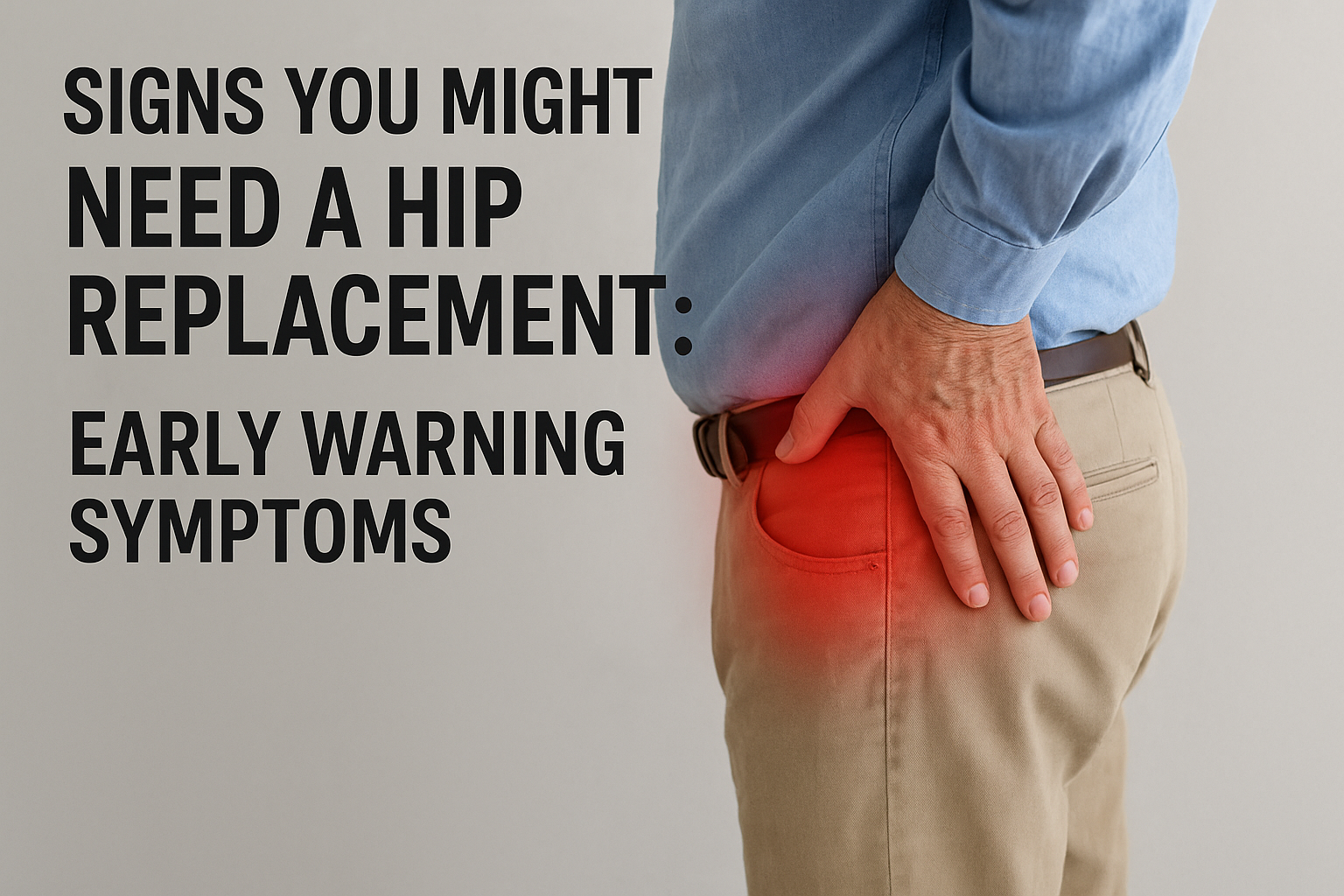
Hip pain can affect every step you take—literally. While mild discomfort can come from strain or injury, chronic pain that limits mobility might signal a deeper issue. Understanding the early warning symptoms of hip joint damage is essential for timely medical attention and improved quality of life.
1. Persistent Hip Pain That Won’t Go Away
One of the earliest signs you might need a hip replacement is constant pain that lingers even after rest or medication. This discomfort may occur while walking, sitting, or lying down. Over time, it can spread to the thigh, groin, or even the knee. When hip pain begins interfering with daily activities like putting on shoes or climbing stairs, it may indicate serious joint degeneration.
2. Stiffness and Reduced Range of Motion
Morning stiffness or difficulty rotating your leg is another early warning symptom. If your hip joint feels locked or you notice reduced flexibility, it could mean the cartilage has worn down. A healthy hip allows smooth, pain-free movement, but when arthritis or structural damage sets in, the joint loses its cushioning, leading to stiffness and grinding sensations.
3. Pain During Rest or Sleep
Hip arthritis often causes discomfort even when you’re not active. Experiencing pain while sitting for long periods or while sleeping on the affected side is a clear indicator of joint inflammation. This symptom can disrupt rest, leading to fatigue and lower overall energy levels.
4. Limping or Difficulty Walking
If you’ve developed a limp to reduce pressure on your hip, it may be a sign that the joint has weakened significantly. As hip cartilage deteriorates, your body compensates with poor posture or uneven walking patterns, putting extra stress on your spine and knees. This gait change is often one of the clearest signs that hip replacement surgery could help restore balance and movement.
5. Difficulty Performing Everyday Activities
Struggling with simple activities like getting out of bed, standing from a chair, or bending over can signal advanced hip damage. When physical therapy and pain management treatments no longer provide relief, hip replacement becomes a viable solution to restore normal function and independence.
6. Grinding or Popping Sensation
A grinding, popping, or clicking sound—known as crepitus—can occur when the hip joint surfaces rub together without smooth cartilage protection. This symptom often accompanies pain and stiffness, highlighting severe wear that may require surgical intervention.
7. Hip Pain After Injury or Trauma
Sometimes hip degeneration accelerates after a fracture or traumatic injury. If pain persists months after healing, it could indicate lasting joint damage. Orthopedic specialists often recommend diagnostic imaging to determine whether hip replacement is necessary for long-term relief.
8. Ineffective Non-Surgical Treatments
When medications, physical therapy, or injections fail to ease symptoms, it’s a sign that the underlying joint damage is too severe for conservative care. Total hip replacement offers a permanent solution for restoring pain-free motion and improving mobility when other methods fall short.
Benefits of Early Diagnosis
Recognizing these early warning symptoms allows for early diagnosis and intervention. With timely consultation from an orthopedic surgeon, you can prevent further damage, explore minimally invasive options, and make an informed decision about hip replacement surgery if needed.
Conclusion
Ignoring hip pain can lead to long-term mobility loss. Recognizing symptoms early ensures timely treatment and helps you regain strength, comfort, and an active lifestyle.