Heart Disease in Women: Why Symptoms Differ and What You Need to Know

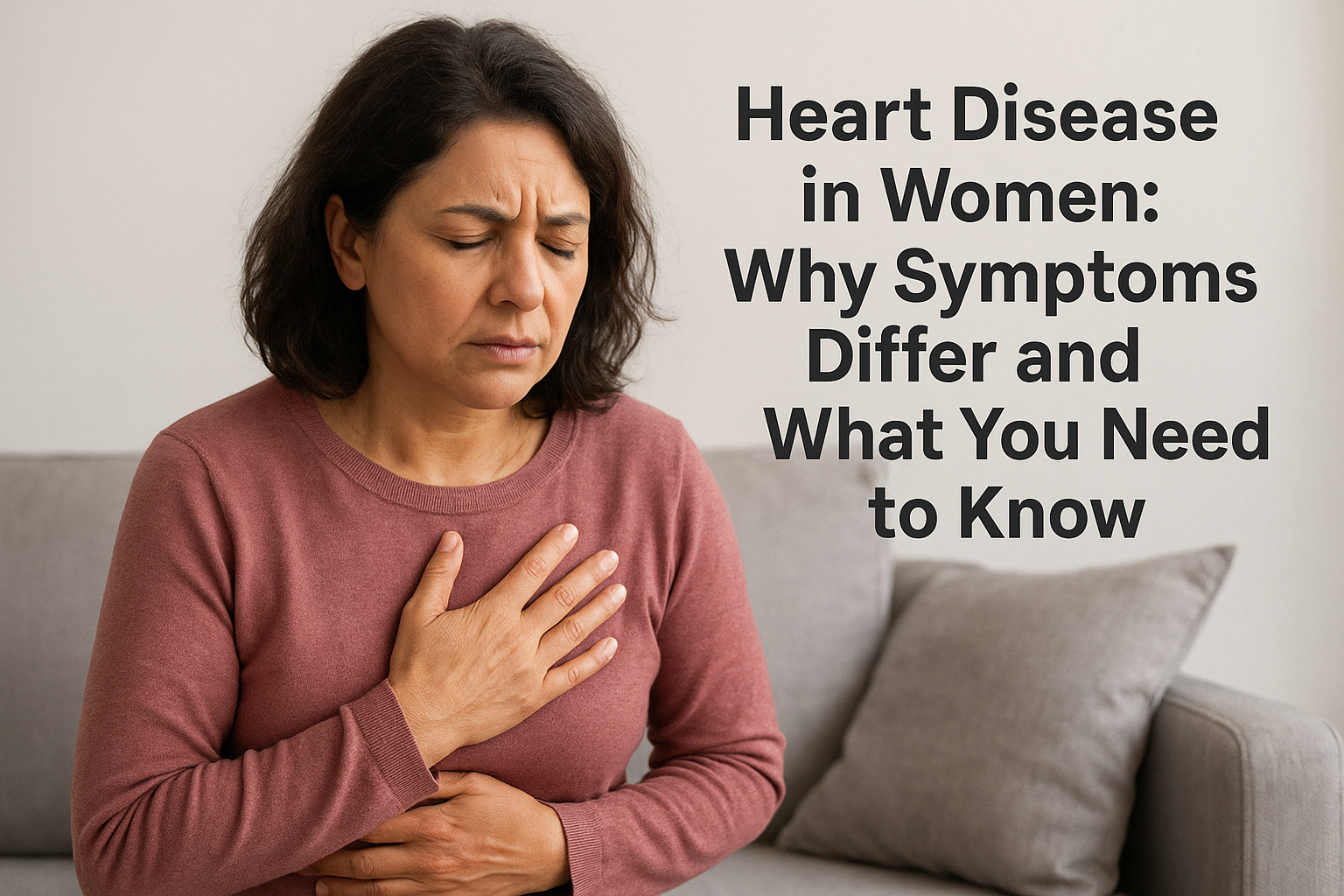
Heart disease in women often goes unnoticed because its signs differ from those in men. While chest pain is the most recognized symptom, women frequently experience subtle signals such as fatigue, nausea, or shortness of breath. Understanding these gender-specific symptoms can save lives and promote early diagnosis.

1. Why Heart Disease Affects Women Differently

Biological and hormonal factors play a major role in how heart disease develops in women. The decline of estrogen after menopause increases the risk of plaque buildup in arteries. Women also have smaller coronary vessels, making blockages harder to detect. Emotional stress and autoimmune conditions further heighten their vulnerability.

2. Common Symptoms of Heart Disease in Women

Unlike men, women may not always feel intense chest pain during a heart attack. Instead, they may notice:

  • Unexplained shortness of breath

  • Dizziness or lightheadedness

  • Fatigue or sleep disturbances

  • Pain in the jaw, neck, shoulder, or back

  • Nausea or indigestion

Recognizing these female heart attack symptoms early can prevent severe heart damage and improve recovery.

3. Major Risk Factors for Women

Certain lifestyle and medical conditions elevate the risk of cardiovascular health problems in women:

  • High blood pressure

  • Diabetes and obesity

  • Smoking and alcohol use

  • Family history of heart disease

  • Sedentary lifestyle

  • Stress and depression

Being aware of these factors helps women make informed decisions about their women’s heart care routines.

4. Preventive Measures for a Healthy Heart

Adopting preventive cardiology practices can reduce heart disease risks significantly. Some effective measures include:

  • Maintaining a balanced diet rich in fruits, vegetables, and lean proteins

  • Regular physical activity, such as brisk walking or yoga

  • Controlling blood sugar and cholesterol levels

  • Avoiding smoking and managing stress

  • Scheduling regular cardiac check-ups

Early intervention and lifestyle management can make a powerful difference in long-term heart wellness.

5. Diagnosis and Treatment Options

Advanced diagnostic tools like ECG, echocardiograms, and stress tests help detect hidden cardiovascular issues in women. Treatments may involve medication, angioplasty, or bypass surgery, depending on severity. Regular consultations with a cardiologist are essential for personalized care and monitoring.

Conclusion

Women must recognize that heart disease is not just a man’s issue—it’s the leading cause of death among women globally. Awareness and early action can save countless lives.

At KHIMS Hospitals, we provide advanced diagnostic facilities and expert care tailored for women’s cardiac health.

Heart Failure

What is Heart Failure?

 When the heart cannot pump enough blood to sustain the body’s tissues and organs, heart failure results. It may impact one or both of the heart’s sides, and its development may be abrupt (acute) or gradual (chronic). Swelling and dyspnea are brought on by the condition’s accumulation of fluid in the lungs and other body organs.

Symptoms Of Heart Failure

Early diagnosis and treatment of heart failure depend heavily on the ability to recognize its signs. Typical signs and symptoms include:

1. Breathlessness

  • occurs when lying down or during physical activity.
  • caused by pulmonary congestion or an accumulation of fluid in the lungs.

2. Weakness and Fatigue

  • Fatigue and poor energy are the results of decreased blood supply to the muscles and tissues.

3. Swelling (Edema)

  • Fluid accumulation in the legs, ankles, feet, and abdomen causes swelling or edema.

4. Rapid or Irregular Heartbeat

  • The heart beats quicker or more erratically to make up for its diminished pumping capacity.

5. Persistent Cough or Wheezing

  • due to an accumulation of fluid in the lungs.

6. Increased Need to Urinate at Night

  • Due to the redistribution of fluid when lying down

7. Lack of Appetite and Nausea

  • Reduced blood flow to the digestive system can cause these symptoms.

8. Difficulty Concentrating

  • Reduced blood flow to the brain affects mental clarity.

Treatment Options for Heart Failure

Medication, surgery, and lifestyle modifications are all part of the treatment of heart failure. The objectives are to control symptoms, enhance quality of life, and stop the illness from getting worse.

1. Modifications in Lifestyle

  • Diet: Consume a diet high in fruits, vegetables, whole grains, lean meats, low-fat dairy, and other heart-healthy foods. Cut back on sugar, salt, and bad fats.
  • Exercise: As advised by your healthcare expert, take frequent physical exercise. 
  • Weight management: To lessen the strain on the heart, maintain a healthy weight.
  • Smoking Cessation: Give up smoking to strengthen your heart.
  •   Limit Alcohol: Either completely abstain from alcohol or consume it in moderation.

2. Drugs

  • Diuretics: Assist in lowering the body’s fluid accumulation.
  • ACE Inhibitors: Reduce blood pressure by relaxing blood vessels.
  • Beta-Blockers: Lower blood pressure and heart rate.
  • Aldosterone Antagonists: Assist in eliminating extra fluid and salt.
  • Digoxin: Lowers heart rate and increases the force of cardiac contractions.
  • Angiotensin II Receptor Blockers (ARBs): Reduce hypertension and strengthen the heart.

3. Medical Devices and Procedures

Surgery called Coronary Artery Bypass Grafting (CABG) is used to increase the heart’s blood supply.

  • Repairing or replacing a heart valve fixes valve issues.
  • ICDs, or implantable cardioverter-defibrillators, are devices that regulate potentially fatal arrhythmias.
  • Pacemakers used in cardiac resynchronization therapy (CRT) to enhance heart rhythm and function.
  • A mechanical pump called a left ventricular assist device (LVAD) aids in the heart’s blood pumping.
  • Heart transplant: In cases of extreme severity where no other therapy works.

Heart Failure Preventive Measures

Maintaining a heart-healthy lifestyle and controlling risk factors are key to preventing heart failure. The following are some essential precautions:

Control your blood pressure: Control your blood pressure with food, exercise, and, if needed,     medication.

Manage Cholesterol Amounts: Maintain appropriate cholesterol levels with a well-balanced diet and, if necessary, medication.

Control Your Diabetes: Control your blood sugar levels with food, exercise, and prescription drugs.

Continue Your Physical Activity:  Regular exercise will strengthen your heart and enhance your general health.

Maintain a Healthy Weight: Achieve and maintain a healthy weight to reduce the heart’s workload.

Quit Smoking: Avoid smoking and exposure to secondhand smoke.

Limit Alcohol: Drink alcohol in moderation or avoid it altogether.

Reduce Stress: Practice stress-reducing techniques such as mindfulness, meditation, and yoga.

When is Heart Failure Occurs

When the heart cannot pump blood efficiently enough to meet the body’s needs, heart failure results. This can occur as a result of several underlying illnesses, such as coronary artery disease, hypertension, cardiomyopathy, or issues with the heart valves. Blood and fluid can back up into the lungs and other areas of the body when the heart’s pumping capacity is impaired. This can cause symptoms including exhaustion, edema in the legs and ankles, and trouble carrying out daily tasks. To enhance heart function and reduce symptoms, managing heart failure usually entails making lifestyle modifications, taking drugs, and in certain situations, undergoing surgery or using medical devices.

How Heart Failure is Diagnosed

To diagnose heart failure, a medical professional must perform a comprehensive evaluation that includes:
 
1. Medical Background Information and Physical Assessment
  • going over risk factors and symptoms again.
  • looking for indications of fluid accumulation and heart-related problems.
2. Diagnostic Examinations
  • Blood tests: To look for signs of other illnesses, such as heart failure.
  • Chest X-ray: To check for heart enlargement and lung fluid.
  • Electrocardiogram (EKG): To evaluate cardiac rhythm and identify prior myocardial infarctions.
  • Echocardiogram: To assess the anatomy and physiology of the heart.
  • Stress test: To evaluate the heart’s response to physical strain.
  • Cardiac MRI: To obtain fine-grained pictures of the anatomy of the heart.
  • Cardiac catheterization: To examine the coronary arteries for obstructions.
Conclusion

In conclusion, managing heart failure requires timely diagnosis and expert care to improve quality of life and outcomes. The Best Cardiology Hospital in Khammam, Khims Hospital, stands out for its exceptional cardiac care, state-of-the-art facilities, and experienced medical professionals. For comprehensive and effective treatment of heart failure, trust Khims Hospital to provide the best cardiology care in Khammam, ensuring your heart health is in the most capable hands.