
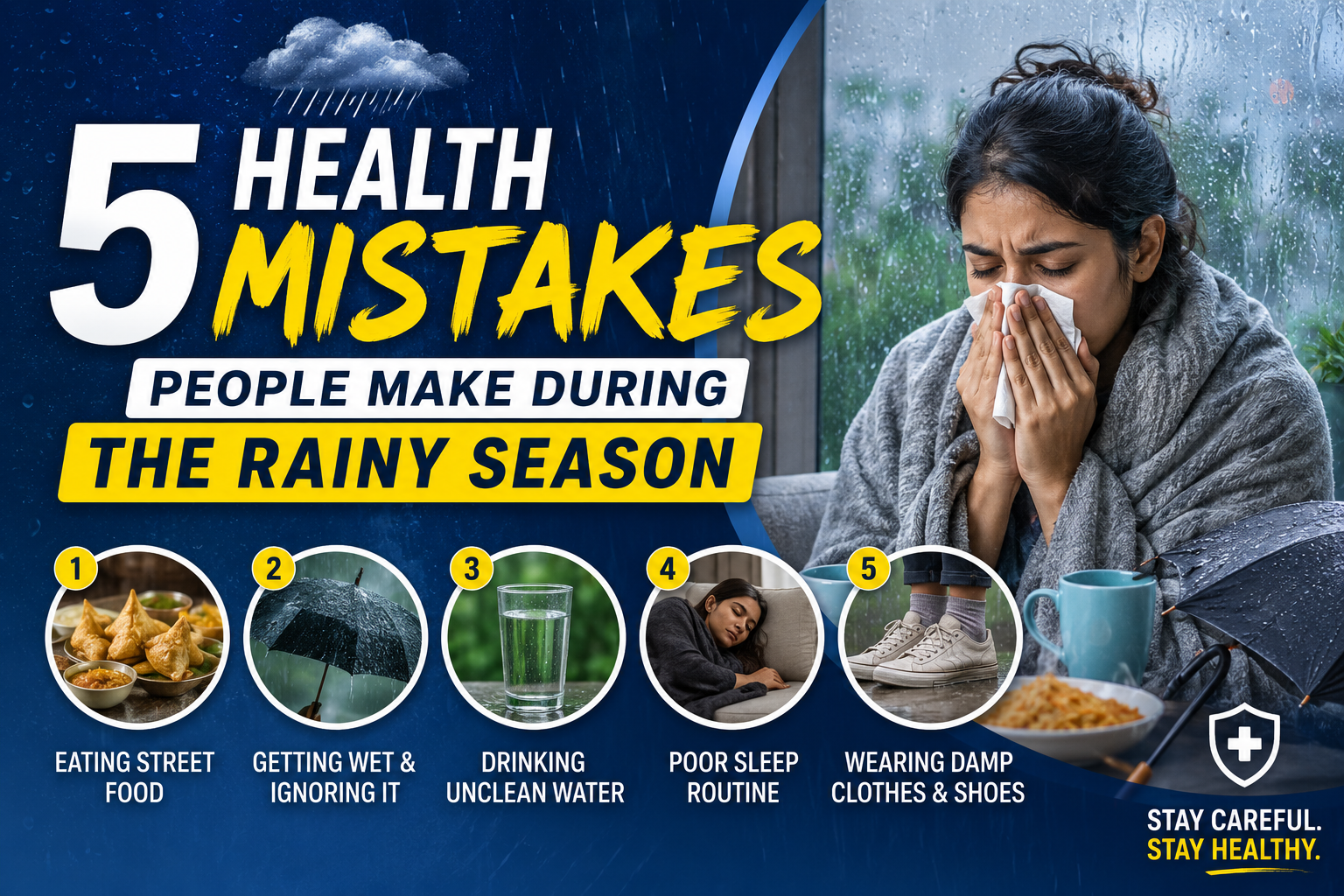
The rainy season brings welcome relief from the summer heat, but it also creates the perfect environment for viruses, bacteria, mosquitoes, and fungi to thrive. As a result, illnesses such as viral fever, dengue, malaria, food poisoning, and fungal infections become more common during the monsoon.
Many people unknowingly make simple mistakes that increase their risk of falling sick. By recognizing these habits and making a few changes, you can enjoy the rainy season while protecting your health.
Let’s look at the five most common rainy season health mistakes—and how to avoid them.
1. Drinking Contaminated Water
One of the biggest health risks during the rainy season is unsafe drinking water. Heavy rains can contaminate water sources with bacteria, viruses, and parasites that cause stomach infections and waterborne diseases.
Common Problems
- Diarrhea
- Typhoid
- Cholera
- Stomach infections
- Vomiting
How to Avoid It
- Drink boiled or filtered water.
- Carry a water bottle when traveling.
- Avoid drinking untreated water from unknown sources.
- Clean your water storage containers regularly.
2. Eating Street Food and Unhygienic Meals
Rainy weather makes hot snacks and street food tempting, but food prepared in unhygienic conditions can easily become contaminated.
Health Risks
- Food poisoning
- Stomach pain
- Vomiting
- Diarrhea
- Gastrointestinal infections
3. Ignoring Mosquito Protection
Stagnant water left behind after rainfall becomes an ideal breeding ground for mosquitoes.
Mosquito bites can spread serious illnesses, including:
- Dengue
- Malaria
- Chikungunya
Prevention Tips
- Use mosquito repellents.
- Wear full-sleeved clothing.
- Sleep under mosquito nets if needed.
- Remove stagnant water around your home.
- Keep windows protected with mosquito screens.
4. Wearing Wet Clothes or Damp Footwear
Many people continue wearing wet socks, shoes, or clothes after getting caught in the rain. Moisture encourages fungal and bacterial growth, leading to skin and foot infections.
Possible Problems
- Athlete’s foot
- Fungal skin infections
- Foot odor
- Rashes
- Itching
Stay Safe
- Dry yourself immediately after getting wet.
- Wear clean, dry socks.
- Allow shoes to dry completely before wearing them again.
- Keep your feet clean and dry.
5. Ignoring Early Symptoms of Illness
Many people assume a fever or cold during the rainy season is “just seasonal” and delay medical care. While many illnesses are mild, some can become serious if left untreated.
Warning Signs That Need Medical Attention
- Fever lasting more than 2–3 days
- High fever with chills
- Persistent vomiting
- Severe body pain
- Difficulty breathing
- Unusual weakness
- Skin rashes
- Bleeding gums or nose
Early diagnosis helps prevent complications and speeds up recovery.
Bonus Tips for Staying Healthy During the Rainy Season
✔ Drink plenty of clean water.
✔ Eat fresh, nutritious food rich in vitamins and protein.
✔ Wash your hands frequently with soap.
✔ Keep your surroundings clean and dry.
✔ Exercise regularly to maintain immunity.
✔ Get adequate sleep every night.
✔ Avoid unnecessary exposure to stagnant water.
✔ Keep your home well-ventilated to reduce dampness.
When Should You Visit a Doctor?
Consult a healthcare professional if you experience:
- Persistent fever
- Severe dehydration
- Continuous vomiting or diarrhea
- Difficulty breathing
- Unexplained fatigue
- Severe body aches
- Signs of dengue or malaria, such as high fever and intense muscle pain
Prompt medical attention can help identify the cause early and reduce the risk of complications.