
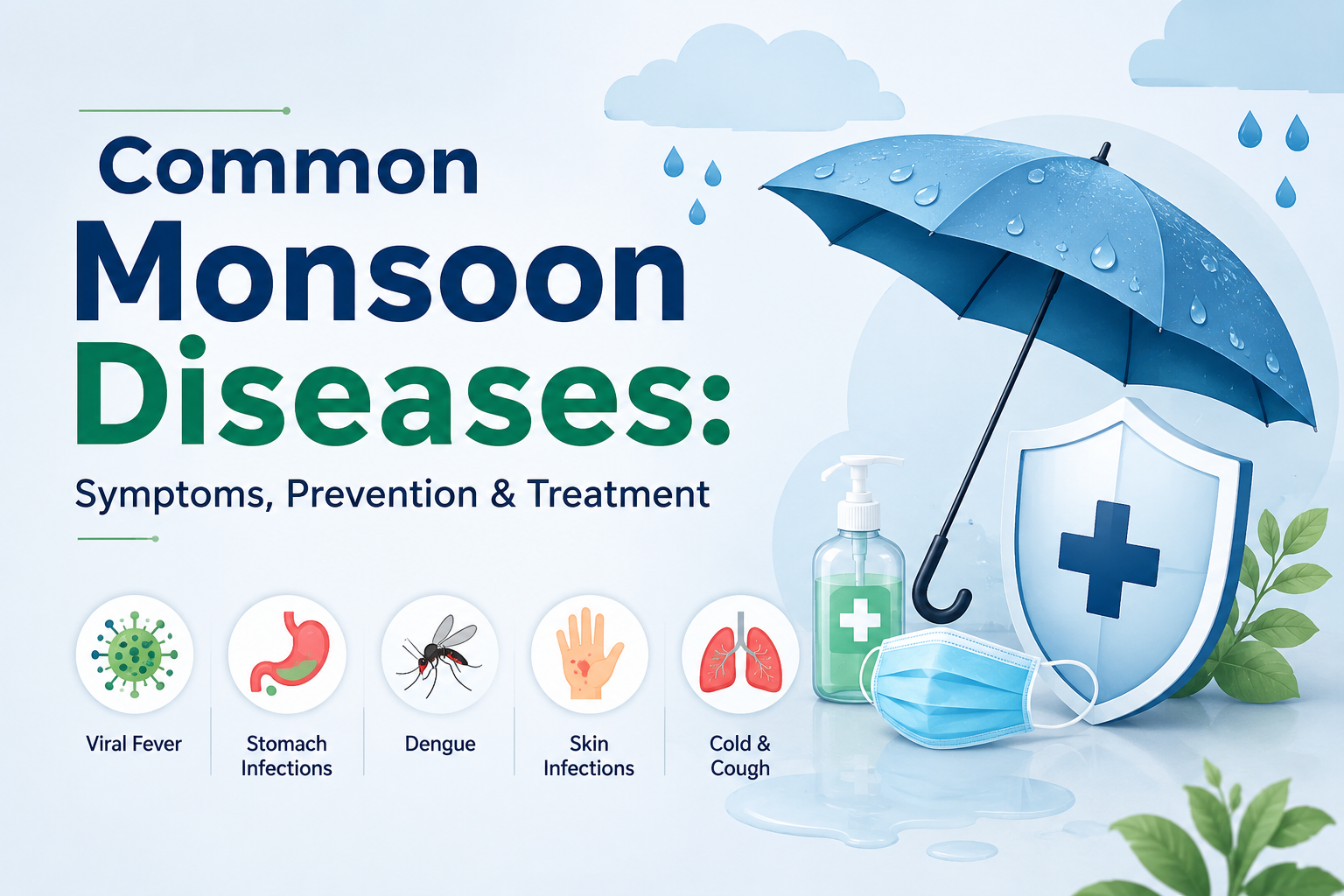
Why Do Diseases Increase During the Monsoon?
During the rainy season:
- Stagnant water becomes a breeding ground for mosquitoes.
- High humidity encourages the growth of bacteria and fungi.
- Drinking water can become contaminated.
- Food spoils more quickly.
- Our immune system may become more vulnerable due to sudden weather changes.
As a result, viral, bacterial, fungal, and mosquito-borne diseases become more common.
1. Viral Fever
What is Viral Fever?
Viral fever is one of the most common illnesses during the monsoon. It is caused by viral infections that spread through contaminated surfaces, coughs, sneezes, or close contact with infected individuals.
Symptoms
- High fever
- Headache
- Body aches
- Fatigue
- Sore throat
- Runny nose
- Chills
- Mild cough
Prevention
- Wash hands regularly.
- Avoid close contact with sick individuals.
- Stay hydrated.
- Eat freshly cooked food.
- Get enough sleep.
Treatment
Most viral fevers improve within 3–7 days with:
- Adequate rest
- Plenty of fluids
- Fever-reducing medicines as advised by your doctor
- Nutritious diet
2. Dengue Fever
Dengue is a mosquito-borne viral disease transmitted by the Aedes mosquito, which breeds in clean stagnant water.
Symptoms
- Sudden high fever
- Severe headache
- Pain behind the eyes
- Muscle and joint pain
- Skin rash
- Nausea and vomiting
- Low platelet count
Prevention
- Prevent water stagnation around your home.
- Use mosquito repellents.
- Wear full-sleeved clothing.
- Install mosquito screens.
- Sleep under mosquito nets when needed.
Treatment
There is no specific antiviral treatment for dengue.
Management includes:
- Plenty of fluids
- Rest
- Monitoring platelet levels
- Hospitalization in severe cases
Seek immediate medical attention if you notice bleeding gums, severe abdominal pain, or persistent vomiting.
3. Malaria
Malaria spreads through the bite of infected Anopheles mosquitoes.
Symptoms
- High fever with chills
- Sweating
- Headache
- Body pain
- Vomiting
- Weakness
Prevention
- Use mosquito repellents.
- Eliminate stagnant water.
- Wear protective clothing.
- Keep surroundings clean.
Treatment
Doctors prescribe anti-malarial medications after confirming the diagnosis through blood tests.
Early treatment helps prevent complications.
4. Typhoid Fever
Typhoid is caused by consuming contaminated food or water infected with Salmonella Typhi bacteria.
Symptoms
- Persistent high fever
- Weakness
- Loss of appetite
- Stomach pain
- Constipation or diarrhea
- Headache
Prevention
- Drink purified water.
- Avoid street food during the rainy season.
- Wash fruits and vegetables thoroughly.
- Practice proper hand hygiene.
Treatment
- Antibiotics prescribed by a healthcare provider
- Adequate hydration
- Soft, nutritious diet
- Complete the full course of medication
5. Cholera
Cholera spreads through contaminated water and food.
Without prompt treatment, it can lead to severe dehydration.
Symptoms
- Severe watery diarrhea
- Vomiting
- Muscle cramps
- Extreme dehydration
- Weakness
Prevention
- Drink boiled or filtered water.
- Wash hands before eating.
- Eat hygienically prepared meals.
- Avoid contaminated food.
Treatment
Immediate treatment includes:
- Oral Rehydration Solution (ORS)
- Intravenous fluids in severe cases
- Antibiotics when recommended by a doctor
6. Leptospirosis
Leptospirosis is a bacterial infection spread through water contaminated with animal urine, especially after flooding.
Symptoms
- High fever
- Muscle pain
- Headache
- Red eyes
- Vomiting
- Fatigue
Prevention
- Avoid walking through floodwater.
- Wear waterproof footwear.
- Cover cuts and wounds.
- Maintain good hygiene.
Treatment
Doctors usually prescribe antibiotics. Early diagnosis greatly reduces complications.
7. Fungal Skin Infections
The humid weather during monsoon encourages fungal growth.
Symptoms
- Itchy skin
- Red patches
- Ring-shaped rashes
- Skin peeling
- Burning sensation
Prevention
- Keep skin dry.
- Wear breathable cotton clothing.
- Change wet clothes immediately.
- Avoid sharing towels.
Treatment
- Antifungal creams
- Oral antifungal medicines for severe infections
- Good personal hygiene
8. Food Poisoning
Food spoils more quickly during the rainy season due to increased humidity.
Symptoms
- Nausea
- Vomiting
- Diarrhea
- Stomach cramps
- Fever
Prevention
- Eat freshly cooked food.
- Refrigerate leftovers promptly.
- Avoid stale food.
- Wash fruits and vegetables thoroughly.
Treatment
- Stay hydrated
- Oral rehydration solutions
- Medical evaluation if symptoms are severe or persistent
Monsoon Health Tips
Follow these simple habits to stay healthy during the rainy season:
- Drink clean, purified water.
- Wash your hands frequently with soap.
- Eat freshly prepared home-cooked meals.
- Avoid uncovered street food.
- Keep your surroundings free of stagnant water.
- Use mosquito repellents and protective clothing.
- Keep your home clean and well-ventilated.
- Exercise regularly to strengthen your immune system.
- Get adequate sleep every night.
- Stay hydrated even if you don’t feel thirsty.