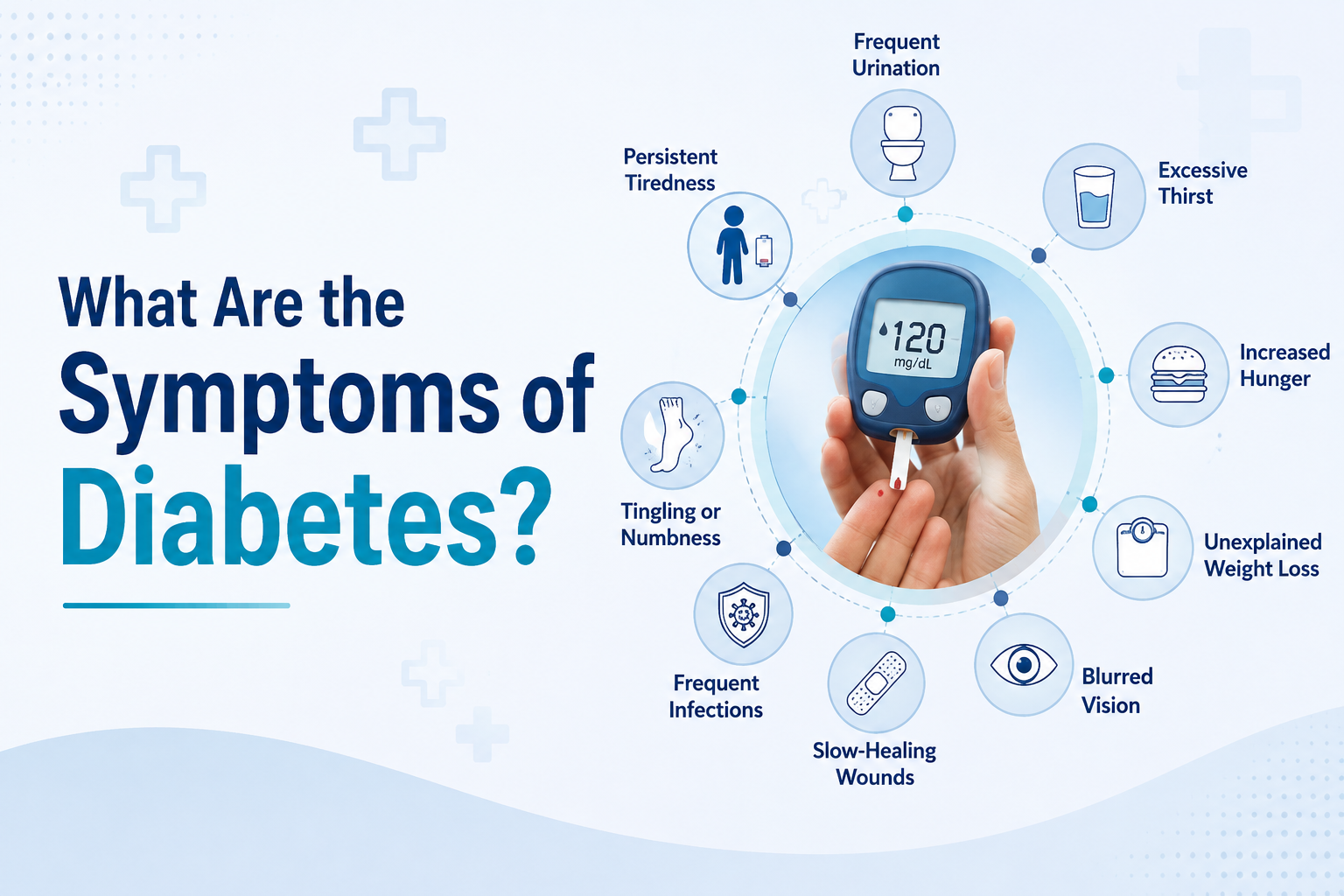
What Are the Symptoms of Diabetes?

Diabetes is a common health condition that affects how your body uses blood sugar (glucose). Recognizing the early symptoms of diabetes is very important because timely diagnosis can prevent serious complications. At KHIMS Hospitals, Khammam, we provide complete diabetes screening, diagnosis, and personalized treatment plans to help patients manage blood sugar effectively.

Common Symptoms of Diabetes

Diabetes symptoms may develop slowly, and many people ignore them in the early stage. Watch out for these signs of diabetes:

  • Frequent urination: Especially at night, due to excess sugar in the blood
  • Excessive thirst: Constant feeling of thirst even after drinking water
  • Increased hunger: Feeling hungry more often than usual
  • Unexplained weight loss: Sudden weight loss without diet or exercise changes
  • Fatigue and weakness: Feeling tired even after proper rest
  • Blurred vision: High blood sugar affects eye lens function
  • Slow healing wounds: Cuts and injuries take longer to heal
  • Frequent infections: Skin, urinary tract, or fungal infections
  • Tingling or numbness: Especially in hands and feet due to nerve damage

These diabetes warning signs should not be ignored, especially if multiple symptoms appear together.

What Causes Diabetes?

Diabetes occurs when the body cannot produce enough insulin or cannot use it properly. This leads to high blood sugar levels over time. The main types include Type 1 diabetes, Type 2 diabetes, and gestational diabetes.

Common risk factors include:

  • Family history of diabetes
  • Overweight or obesity
  • Lack of physical activity
  • Unhealthy diet high in sugar and fats
  • Age and lifestyle factors

When Should You Get Tested?

You should consider a blood sugar test if you notice symptoms like frequent urination, excessive thirst, or unexplained weight loss. Even without symptoms, people with risk factors should undergo regular diabetes screening.

Early detection helps prevent complications such as:

  • Heart disease
  • Kidney damage
  • Eye problems
  • Nerve damage

Diabetes Care at KHIMS Hospitals, Khammam

At KHIMS Hospitals, we focus on early diagnosis and complete diabetes management. Our approach includes:

  • Blood sugar monitoring and diagnosis
  • Diet and lifestyle counseling
  • Medication and insulin management (if required)
  • Regular follow-up care

Proper diabetes treatment in Khammam can help patients lead a healthy and active life.

If you are experiencing possible diabetes symptoms in Khammam, consult the experts at KHIMS Hospitals for accurate diagnosis and effective care. 

Top 10 Early Warning Signs of Diabetes You Should Never Ignore

Diabetes is a chronic condition that impacts millions of people worldwide. Recognizing the early warning signs is critical for timely intervention, preventing serious complications, and improving quality of life. Monitoring your body for unusual changes can save your health in the long run.

1. Frequent Urination

Frequent urination, medically called polyuria, is often one of the earliest indicators of diabetes. When blood sugar levels are high, the kidneys work overtime to filter excess glucose, leading to more urine output.

Key points to notice:
  • Waking up multiple times at night to urinate
  • Needing to urinate more often than usual during the day
  • Feeling urgency even when the bladder isn’t full

Ignoring this sign may lead to dehydration and electrolyte imbalance.

2. Excessive Thirst

Excessive thirst, also known as polydipsia, usually accompanies frequent urination. Your body loses fluids rapidly, signaling you to drink more.

Warning signals:
  • Always feeling thirsty despite drinking enough water
  • Dry mouth and cracked lips
  • Frequent need for fluids, especially water

Persistent thirst can indicate that your body is struggling to maintain proper fluid balance due to high blood sugar.

3. Unexplained Weight Loss

Sudden and unexplained weight loss is a common diabetes symptom, particularly in type 1 diabetes. When insulin is insufficient, your body cannot use glucose for energy, so it starts burning fat and muscle for fuel.

Things to watch for:
  • Losing weight without diet or exercise changes
  • Muscle weakness or fatigue
  • Clothes feeling looser than usual

Even a few kilograms lost unexpectedly should prompt a consultation with a healthcare provider.

4. Extreme Fatigue

Persistent fatigue is often overlooked but is a key diabetes warning sign. High blood sugar prevents your body from using glucose effectively, leaving you drained of energy.

Common patterns:
  • Feeling tired after minimal physical activity
  • Difficulty concentrating at work or school
  • Sleep disturbances or daytime sleepiness

Lifestyle adjustments may help, but unexplained fatigue combined with other symptoms requires medical evaluation.

5. Blurred Vision

High blood sugar can cause fluid shifts in the eyes, altering the shape of the lens and leading to blurred or distorted vision.

Indicators include:
  • Trouble focusing on objects
  • Temporary vision changes that fluctuate with sugar levels
  • Eye discomfort or headaches

Regular eye check-ups are important for early detection and prevention of diabetic eye complications.

6. Slow-Healing Wounds

Diabetes affects circulation and immunity, making it harder for cuts, scrapes, or infections to heal.

Signs to notice:
  • Small wounds taking weeks to close
  • Frequent infections around minor injuries
  • Scabs that do not heal properly

Prompt attention and proper wound care can prevent serious infections like ulcers or gangrene.

7. Frequent Infections

High blood sugar weakens the immune system, leading to recurring infections. Skin infections, urinary tract infections, and gum disease are common among diabetic patients.

Red flags:
  • Persistent yeast infections
  • Recurrent urinary tract infections
  • Swollen gums or dental issues

Early treatment and blood sugar management reduce the frequency and severity of infections.

8. Tingling or Numbness in Hands and Feet

Diabetic neuropathy affects nerves, causing tingling, numbness, or burning sensations in extremities.

Symptoms to observe:
  • Pins-and-needles sensation in fingers and toes
  • Reduced sensitivity to heat, cold, or pain
  • Foot discomfort while walking

Regular check-ups and glucose control can slow nerve damage progression.

9. Increased Hunger

Also called polyphagia, excessive hunger occurs when the body cannot use glucose for energy. Despite eating, cells remain starved, triggering constant appetite.

Indicators:
  • Feeling hungry shortly after meals
  • Cravings for sugary or high-carb foods
  • Rapid eating without feeling satisfied

Balancing diet and monitoring blood sugar can help manage this symptom effectively.

10. Darkened Skin Patches

Acanthosis nigricans is a condition where diabetes causes dark, velvety skin patches, often in folds like the neck, armpits, or groin.

What to watch:
  • Skin thickening or dark patches
  • Rough or itchy texture
  • Areas that appear suddenly

This symptom often signals insulin resistance and should not be ignored.

Conclusion

Recognizing these early warning signs of diabetes is crucial for preventing serious health issues. Timely action through lifestyle changes, testing, and medical guidance can make a significant difference.

Take control of your health—monitor your symptoms and get professional advice. Visit our KHIMS Hospital Khammam for expert care.